
Applications / Rail
Rail
Noise barriers for railway corridors, stations and platform edges. Designed for the pressure and suction of passing trains, dynamic and fatigue loads, and the rules for work beside the track.
Protecting Communities Along the Railway Network
Higher service frequencies and urbanisation put more people beside the line. A railway barrier has to perform for decades under demanding conditions: the pressure and suction of passing trains, dynamic and fatigue loads, and the rules for working beside the track.
Permanent Protection
Continuous protection for the life of the railway, with foundations, posts and elements specified together.
Built for Rail Loads
Aerodynamic pressure and suction, dynamic and fatigue loading, wind and mechanical stability resolved in one specification.
Shaped by Track Access
Installation restrictions and safety rules beside the line shape the system: lighter elements, shorter possessions, fewer movements.
Where we come in
From the First Noise Study to the Last Element
A rail barrier is specified by many hands, from the infrastructure manager who sets the limit to the crew that fixes the last element in a night possession. We work with all of them, at every stage.
Noise study and planning
The infrastructure manager sets the limit and the line is assessed for noise and for the trains that will run on it. We help size the problem: which stretches need absorbing, which need insulating, and where platforms and sightlines stay open.
Specification and design
Engineers and consultants fix the system against rail loads: aerodynamic pressure and suction, dynamic and fatigue loading, wind and mechanical stability. We supply EN 1793, EN 16272 and EN 1794 data, drawings and mounting details.
Tender and documentation
The scheme goes to market under the rail standards of each country. We provide product sheets, test reports and EPD data, answer tenderers’ questions and keep the specification intact through procurement.
Installation and service life
Track access is limited and the rules beside the line are strict. Lighter elements mean shorter possessions, smaller foundations and fewer movements, then decades of service with minimal maintenance.
Systems for Rail
Three routes apply beside the track: absorb, insulate or keep the view. RMP Recycled leads where it fits; the rest of the portfolio follows the requirement.
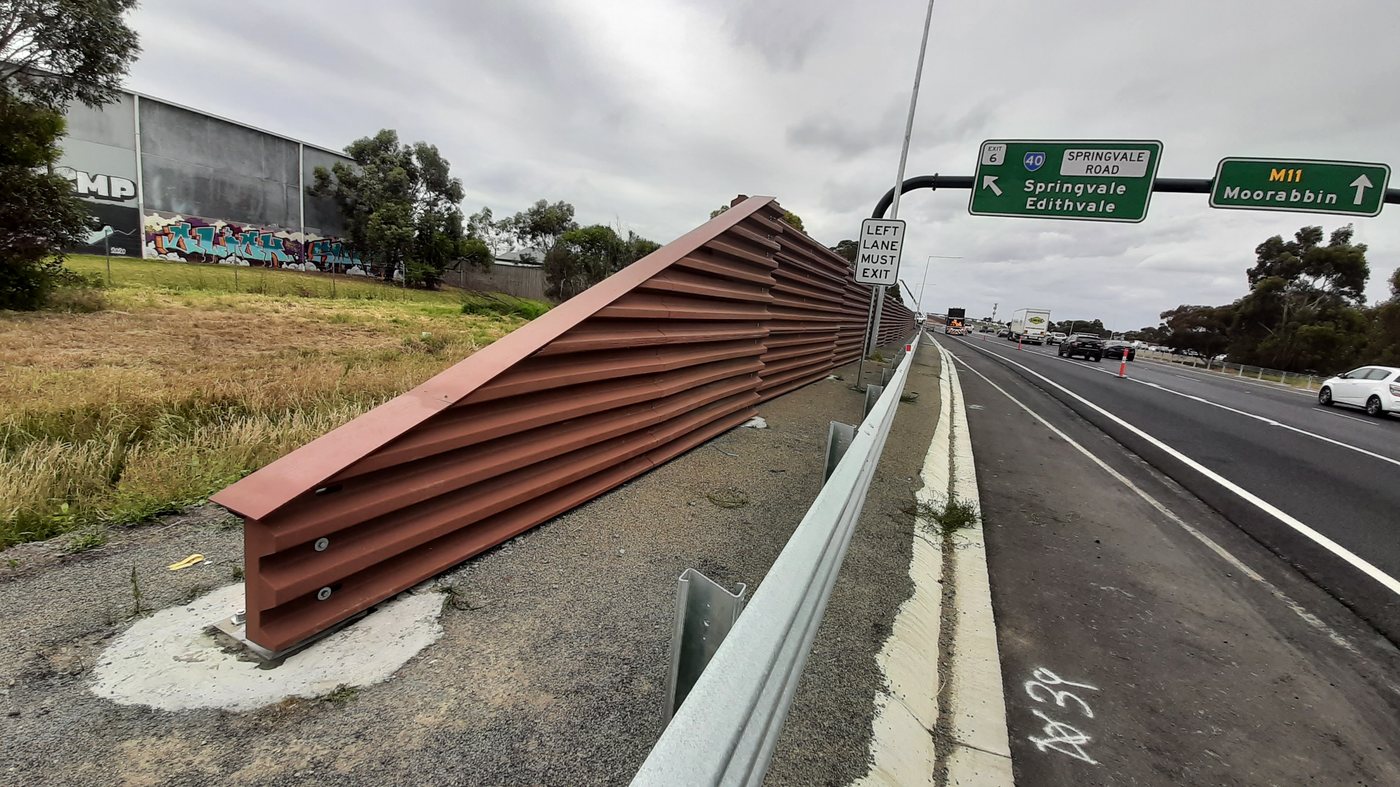
Reduce reflections
Noise Absorbing
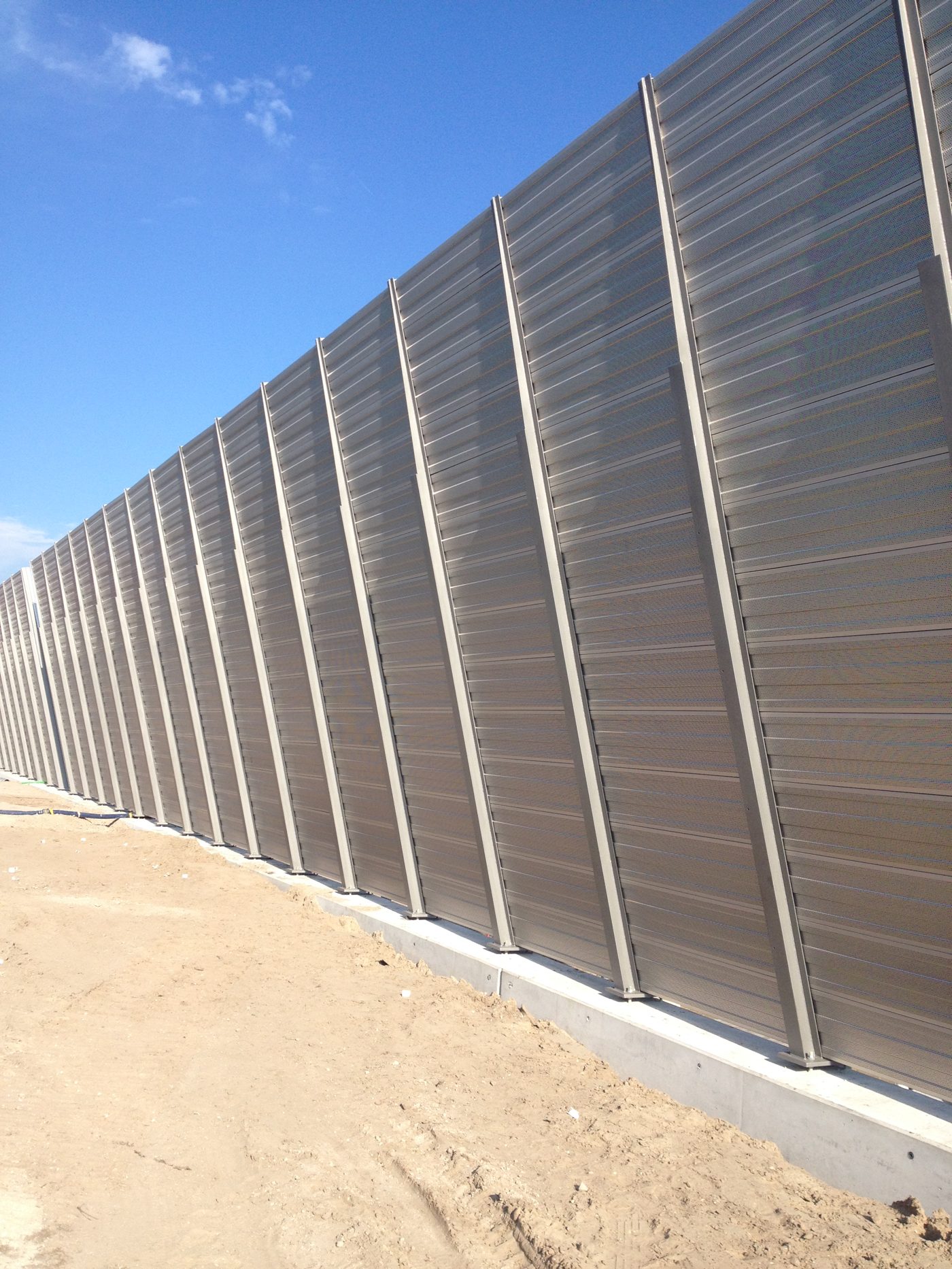
Block transmission
Noise Insulating
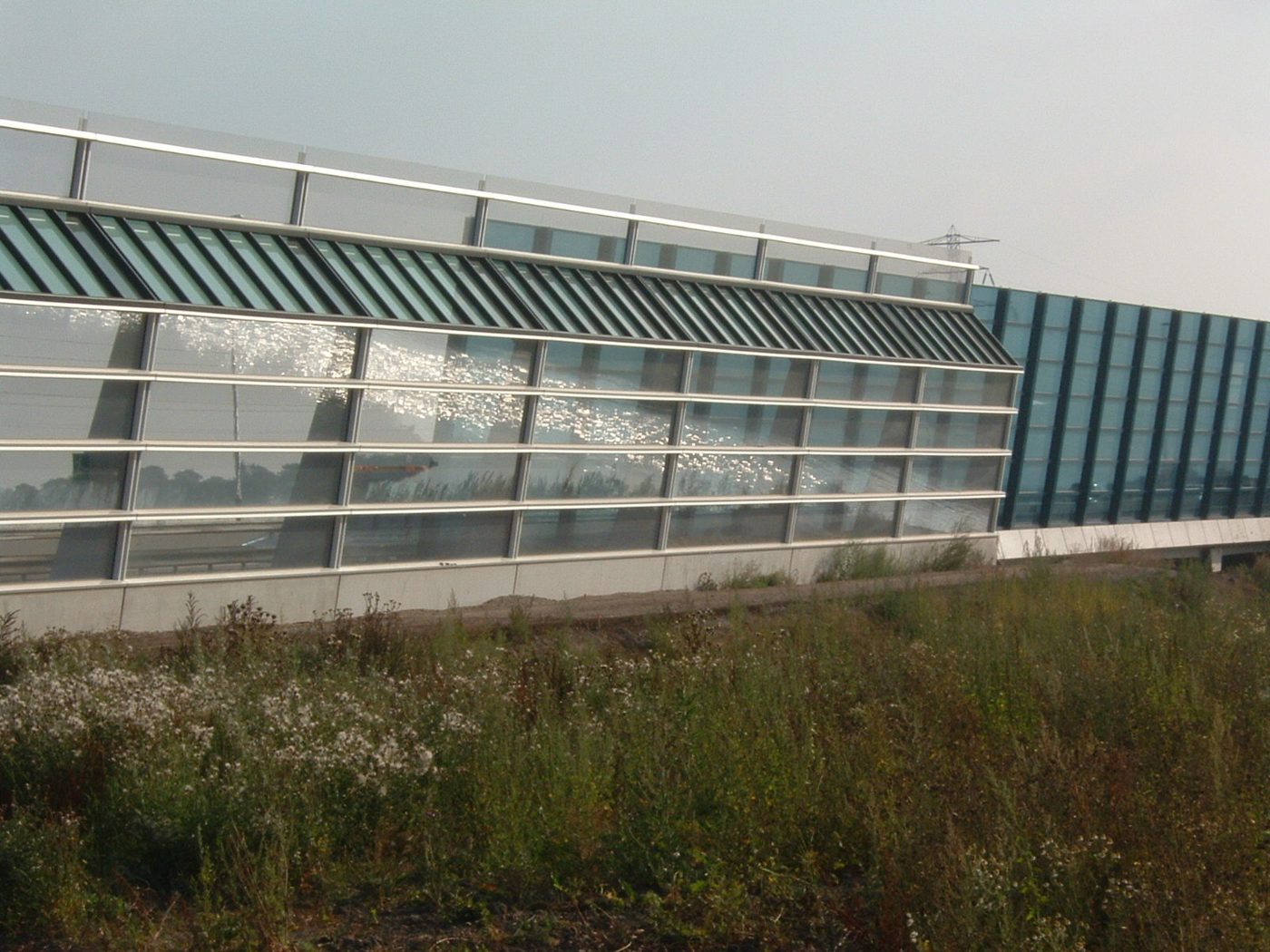
Evidence for rail
Tested for Rail Loads
Rail asks more of a barrier than wind. These are the tests behind the RMP Recycled system; full reports on request.
| Test | Method | Result |
|---|---|---|
| Dynamic pressure, high-speed rail | EN 1990 / EN 1991 | 4.6 to 8.6 kN/m² |
| Fatigue | Cyclic loading | 100 million cycles |
| In-situ acoustics, Dutch Rail test | EN 1793-4, -5, -6; EN 16272 | DLα 6.1 to 6.2 dB; DLSI 27.8 to 30 dB |
Projects in Practice
Projects in Practice
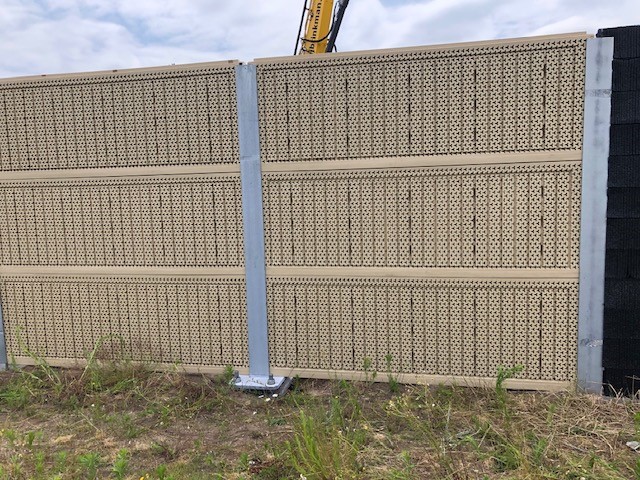
Dutch Rail Test

Skyrail, Melbourne
Platform edge parapets on an elevated rail line, moulded with fixing points in place.


